
Who we are
About Us

Introduction
Università Politecnica delle Marche is a world-leading University driven by creativity and curiosity offering a range of expertise from leading academics. It has almost 15,000 students and include five faculties: Engineering, Medicine & Surgery, Economics, Science, and Agriculture.
The Faculty of Engineering owns modern teaching structure, equipped with sophisticated instrumentation and large laboratories, offering to students a wide variety of courses. Inside Faculty of Engineering, the Department of Industrial Engineering and Mathematical Science – DIISM – plays a crucial role in the educational and training process of students and learners. The Industrial System Engineering (ISE) Research Group is active within DIISM to contribute to the advancement, development and dissemination of scientific and technical knowledge.
Mission
The aim of Industrial System Engineering (ISE) Research Group is to contribute to the advancement, development and dissemination of scientific and technical knowledge in the planning, design, construction, operation, maintenance, conversion and disposal of production systems, logistics and services. Teaching, research and technology transfer are performed in a line of innovation, modelling methodologies and techniques with the ultimate goal of promoting the socio-economic well-being and the sustainable development.
Scientific Committee

Claudia Paciarotti
Claudia Paciarotti is an Associate Professor in the Department of Industrial Engineering at Marche Polytechnic University. Her background in Mechanical Engineering and her later degree in Psychology have contributed to a cross-disciplinary approach to operations management and supply chain topics, applied to complex contexts such as humanitarian logistics, the evaluation of disaster relief operations, and the standardization of humanitarian supply chains, as well as the reorganization of processes in the healthcare sector and short food supply chain.
In recent years, her research has also focused on engineering education and project-based learning, linking research and educational innovation.

Giovanni Di Nicola
His research activity is oriented on environmental issues, focussing to environmental friendly refrigerants and renewable energies. Recently, he developed prototypes of parabolic concentrator solar collectors and of solar cookers with the aim of optimizing thermal efficiency, also through the use of innovative phase change materials.

Giovanni Mazzuto
His research activity mainly deals with environmental analysis of process plants and maintenance management, analysis of the behaviour of the supply chain, project management and product development, decision-making process, artificial intelligence algorithms for industrial application, and safety and security. In particular, his research activity ranges in the Industry 4.0 context.

Claudio Gatti
Claudio has started his professional pathway in 1997 working with some of the most important European aerospace and automotive industries, developing a strong expertise in Logistics, Operations Management and Commercial Operations.
In 2005, he has joined the nonprofit sector serving with primary NGOs as Hospital Manager, CFO, Planning & Budgetary Matters Director and Head of Logistics & Procurement.

Luca Frasca
Graduated in Geological Sciences at the La Sapienza University of Rome, he then specialized in Procurement & Logistics by working in various international NGOs and gaining over 15 years of experience in Operations Management and emergency-related fields – WASH, Shelter, Needs Assessment. He is experienced as well in Project Evaluation as team leader and team member, with specific focus on Humanitarian Operations, WASH and Shelter Cluster sectors. Senior Humanitarian Expert in EC DG-ECHO Logistics Support evaluation at global level (2022).
Collaborators

Federica Massanova
Graduated with a Bachelor’s and Master’s degree in Management Engineering, with a thesis on waste management in humanitarian contexts. She has over 10 years of experience in Procurement and Logistics with international humanitarian organizations, both in the field and at headquarters level. Her expertise includes Operations Management, Supply Chain coordination, and Emergency Response, with a focus on optimizing logistics systems to support effective humanitarian interventions.

Michela Balzino
Michela has been working as a humanitarian Supply Chain expert for the past ten years focusing on supply chain planning and sustainability. She worked for several United Nations organizations such as the World Food Programme, the UN Secretariat and UNICEF in several duty stations.
Her experience directly feeds into her current work which focuses on supporting the humanitarian community to embed environmental sustainability into humanitarian supply chain operations through coordination, awareness raising and provision of technical expertise.
Michela holds a Master of Art (M.A) degree in Environmental Engineering from the Politecnico di Torino.

Aninia Nadig
Aninia is an independent consultant specialising in audits and trainings on humanitarian standards, as well as evaluations. She has over 20 years’ experience in the fields of forced migration, refugee and IDP protection and humanitarian standards. Her background is in forced migration studies and European asylum policy.

Fred Jaunasse
Fred Jaunasse is a logistics specialist with over 20 years of humanitarian experience, including 8 years in fragile states. He has worked with a CBO in Uganda, then MSF and Oxfam, managing logistics in crisis, recovery, and development contexts. At Oxfam, he held senior roles including Regional Coordinator and Senior Adviser for the Global Humanitarian Team. He holds degrees in business and humanitarian logistics, and certifications in emergency response and logistics training. Fred speaks French, English, and Spanish fluently, with working knowledge of Italian.

Filipe Louraço Costa
Filipe Louraço Costa is a supply chain leader with over 15 years of international experience across the private and humanitarian sectors. He currently serves as Global Head of Supply Chain at the International Federation of Red Cross and Red Crescent Societies (IFRC), providing strategic leadership and oversight of global logistics, procurement, and supply chain operations to strengthen efficiency, resilience, and sustainability across the Federation’s worldwide network.
Throughout his career, Filipe has held senior leadership positions in several international NGOs and has managed complex supply chain systems and large-scale operations in Europe, the Middle East, Africa, and South America. He began his career in the FMCG sector, gaining extensive experience in retail and distribution logistics, and has also contributed to the governance of a humanitarian logistics organization as a member of its supervisory board.
He holds a Bachelor’s degree in Business Administration, a postgraduate diploma in Humanitarian Operations Management, and an MBA in Leadership and Supply Chain Management from Kühne Logistics University.

David Semerian
David Semerian is a seasoned French professional with over two decades of experience in engineering and logistics within the humanitarian sector. Adept at leading emergency responses, his experience includes key roles in WFP, UNICEF, and ICRC, where he led logistics and project management during critical events. He is known for cross-cultural leadership and success in managing logistics hubs, assessments, and civil engineering projects. His academic background includes a Master’s in Commercial Logistics, a Post-Graduate Certificate in Project Management, and training in humanitarian logistics and construction.

Lodovico Mariani
Lodovico’s professional career developed on two tracks: 1) management – mainly with NGOs. In the field and in the HQs. And also both in operational (logistics, programme support) and support positions (e.g. HR, admin); 2) training – both for experienced and entry level professionals. He worked in areas of crisis and conflict, such as Afghanistan, Pakistan, Lebanon, South Sudan, Iraq, Sri Lanka and Philippines.

Tanja Berretta
Tanja Berretta is an independent consultant with over 20 years of experience in strategy, programme design, capacity development and management in humanitarian and development sectors. She has led major crisis response operations across South Asia, Africa, and Latin America with organizations such as UNHCR, UNDP, Oxfam and Handicap International, focusing on inclusive programming in complex, crisis-affected contexts. Tanja also has academic experience as a lecturer and course director.

Fausto Marincioni
His professional experience with government and international agencies (United States Geological Survey, the Italian Ministry of Foreign Affairs, the United Nations) involved the design and implementation of government projects aimed at optimizing the use of modern information technologies for scientific exchange, natural hazard control, and emergency management.

Paolo Vaccari
He is an expert on logistics, operational coordination and assessment in international rescue and relief missions. His main activity is planning, design and conduct European Exercise on civil protection. Member of EU Commission Expert Group on Capacities and Global co-chair of UN-INSARAG working group on Flexible Response, has been Mentor for WHO classification of Emergency Medical Teams (China, Russia, Israel). He is lecturer on EU deployment at Union Mechanism Induction Course of Dg-ECHO.

Moustapha Ouedraogo
I specialize in navigating the logistical complexities of conflict, post‑conflict, and natural disaster environments. Since 2004, I have progressed from Base Logistician to Regional Logistics Coordinator, leading operations for international organizations including MSF Belgium, Mercy Corps, International Medical Corps, and INTERSOS.
My expertise lies in designing resilient supply chains in high‑pressure humanitarian responses across diverse contexts. With an initial foundation in the construction and tobacco industries, I transitioned into humanitarian logistics, where I am now committed to mentoring multidisciplinary teams and advising NGOs on optimizing their humanitarian impact through operational excellence.

Leopoldo Poggiali
Leopoldo Poggiali is an experienced humanitarian professional with a background in Theoretical Physics and robust expertise in Logistics, Supply Chain, and Security Management.
Currently serving at CESVI Headquarters as the Head of Logistics, Supply and Security, he focuses on providing global oversight, developing policies, and leading the digitalization of procurement systems.
In his field roles with COOPI and INTERSOS, including high-risk missions in Sudan, Ukraine, and Libya, he specialized in rapidly setting up and managing effective supply chains. His operational skills include defining mission security plans, managing multi-million dollar project budgets, and managing and coordinating standard and contingency operations in high-risk scenarios.

Tullia Venturi
Tullia Venturi is an emergency physician currently contracted with AUSL Bologna, where she operates on territorial emergency response units and within spoke-area emergency departments, managing both major and minor emergency cases. She began her medical training and early work at Policlinico Umberto I in Rome, initially in child neuropsychiatry before transitioning to the emergency field. Dr. Venturi gained extensive acute-care experience in anesthesia, intensive care, and emergency services at Torrette Hospital in Ancona and at Marche Nord Hospitals. She later worked as a freelance emergency physician across several facilities in the Veneto region, including Chioggia, Montagnana, Cittadella (via hydro-ambulance Venice), and additional emergency units. In 2023 she took part in a training initiative at “Our Lady of Consolata” Hospital in Kisubi, Uganda, where she helped educate local healthcare personnel in emergency response to sudden cardiac arrest. Since 2022, she has been a member of the volunteer association ARES ODV, contributing to the 2025 edition of the UNIVPM Master in Humanitarian Logistics with a lecture on mass-casualty emergencies. Dedicated to ongoing professional development, her focus lies in holistic, patient-centered emergency care.

Francesco Barbero
Francesco Barbero is a Critical Care Nurse Specialist with extensive experience in global health, remote medicine, and humanitarian response. He has worked in intensive care, emergency nursing, aeromedical retrieval, and public health, with deployments across Africa, Asia-Pacific, and Europe. He has collaborated with international organisations, governmental bodies, and non-governmental organisations on initiatives related to emergency care, health preparedness, and clinical support in challenging settings.
He has operated in a wide range of remote and resource-limited environments, contributing to clinical operations, workforce development, and preparedness at organisational and system levels, applying context-adapted strategies for effective care delivery.
Francesco is a Teaching Fellow at the University of Turin, where he contributes to academic training in critical care and emergency nursing. He is also a Fellow of the Faculty of Remote, Rural and Humanitarian Healthcare of the Royal College of Surgeons of Edinburgh and collaborates with CRIMEDIM on training initiatives and research projects. His current academic interest focuses on public health approaches in disasters and health crises.

Gabriele Galli
Gabriele Galli (Ancona, 1991) is a specialist doctor in Anesthesia and Critical Care with a Master’s diploma in Marginalization, Migration, and Poverty Medicine.
Working in the Health Emergency System since 2017, he is active in international disaster response. As a member of ARES odv, he participates in EUCPM UMI and SEC training courses, and several Euromodex exercises (Romania, Estonia, Italy). He also served as Liaison Officer for the Ukrainian Team during the SARS-CoV-2 pandemic.
His humanitarian experience includes field missions in Uganda (2017, 2019, 2023), Greece (2023), Mediterranean hotspots of Lampedusa (2017, 2023, 2024) and Pantelleria (2023), and on humanitarian ships in the Mediterranean sea (2020, 2021). He has also responded to major national disasters (2016 Central Italy earthquake, 2018 Corinaldo emergency, 2009 Abruzzo earthquake), receiving Public Merit. He coordinates a solidarity clinic in Ancona with Caritas. Since 2025, he has been a Laboratory Guide at the Faculty of Medicine and Surgery (UNIVPM) and an external lecturer for the Leiden University’s Faculty of Governance and Global Affairs and UNIVPM’s Master in Humanitarian Logistics.

Sandro De Luca
Sandro De Luca has been active in the field of international cooperation since 1990. He has carried out long- and short-term missions in approximately 25 countries across Africa, Latin America, Eastern Europe, and the Middle East.
Since 1997, he has worked with the Italian NGO CISP (International Committee for the Development of Peoples), where his roles have included Director of the Africa Geographic Area. In this capacity, he coordinated local offices, monitored projects, and provided strategic and methodological guidance for the identification, design, implementation, and evaluation of interventions.
From July 2019 to June 2025, he served as the Director General of CISP. Since June 2025, he has held the position of Vice President of the organization. Additionally, since May 2025, he has been the President of the NGO network LINK 2007.
He teaches postgraduate courses in Italy and abroad on topics related to cooperation and humanitarian action. He is also the author of various essays and articles on humanitarian aid, migration, and development cooperation.
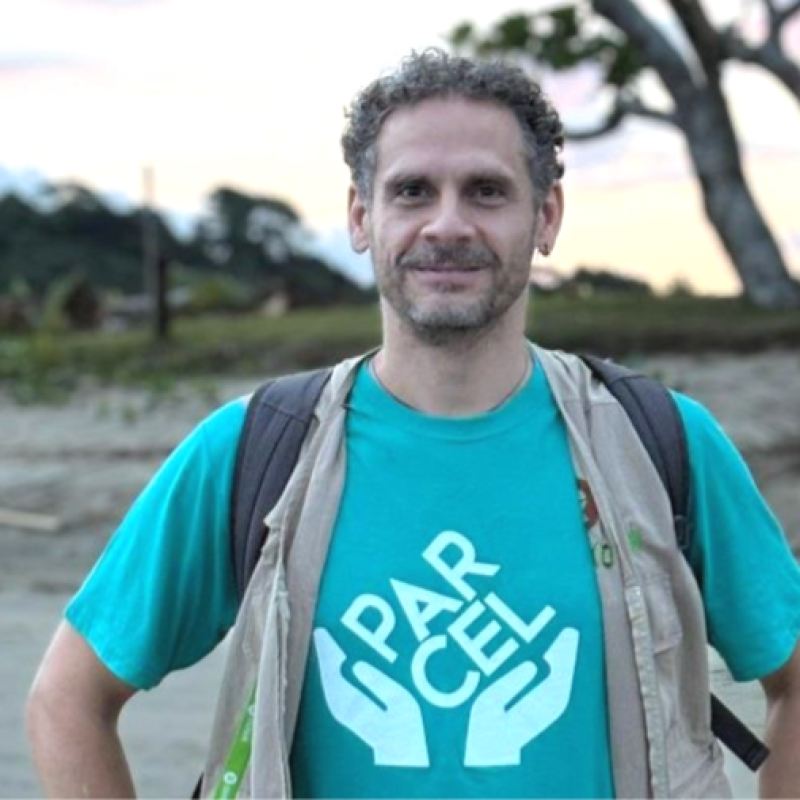
David Salvador
David Salvador is an emergency logistics and supply chain professional with over a decade of experience supporting large-scale humanitarian crisis. In recent years, David has combined his field background with more strategic roles, serving as Supply & Logistics Adviser for Oxfam’s Global Humanitarian Team and as Project Lead of the PARCEL Network—an inter‑agency initiative that strengthens the logistics and supply chain capacity of local and national humanitarian actors.
Partners

Think Global is an Italian based consultancy firm sharing a consolidated experience in international projects and technical consultancy in developing countries. Its activities are focused on project management, business planning and capacity building in various sector including health, industry, energy and agriculture; working in collaboration with profit and non-profit partners, the mission of Think Global is to bring innovation and development to emerging economies through a social impact-oriented business development design.

Oxfam is a global movement of people, working together to end the injustice of poverty. Working with partners, we use a combination of practical tactics and innovation to deliver development programs, public education, campaigns, advocacy and humanitarian assistance in disasters and conflicts.
At any given time, we are responding to over 30 emergency situations, giving life-saving support to those most in need. We help people caught up in disasters and conflicts across the world with clean water, food, sanitation and protection. We stay long after the dust has settled to help rebuild communities and support them in being better prepared to cope with shocks and uncertainties.

INTERSOS is an international humanitarian organisation, founded in Italy, which operates on the front line in contexts of war, violence, extreme poverty, natural or man-made disasters.
Since 1992, our workers have been bringing aid to populations affected by humanitarian crises, with a particular focus on protecting the most vulnerable people, providing medical care, distributing basic necessities and offering emergency shelter. Every day we help to meet basic needs such as the right to food, water, health, shelter and education.

CESVI stands for Cooperazione (Cooperation), Emergenza (Emergency) and Sviluppo (Development) CESVI Foundation is an independent secular humanitarian organisation established in Bergamo in 1985. For almost 40 years, it has been bringing Italian generosity, heart and dedication to emergency situations and in the poorest areas of the world through projects to combat famine and major pandemics, to safeguard both people and the environment. CESVI provides tools and expertise to enable those it helps be the authors of their own future. It has been awarded three times with the ‘Oscar di Bilancio’ for transparency and is part of the Alliance2015 European network.

Founded in 1950, Doctors with Africa CUAMM was the first non-governmental organization focused on healthcare to be recognized by the Italian government. It is now the country’s leading organization working to protect and improve the wellbeing and health of vulnerable communities in Sub-Saharan Africa.
Working with international and local partner teams, CUAMM provides medical aid and expertise in 8 African countries.
CUAMM also carries out capacity-building activities and conducts and disseminates scientific research with the end goal of ensuring that the fundamental human right to health can be enjoyed by everyone everywhere.

We World is an NGO that has been working for over 50 years to guarantee the rights of women, girls and children in 26 countries around the world, including Italy. The projects bring to the centre anyone who is on the margins, geographically and socially, promoting their human and economic development, so that they can become protagonists of their own change.
We World is a humanitarian organisation that can operate in emergency contexts thanks to its certification by ECHO (European Civil Protection and Humanitarian Aid Operations).
Awareness-raising work is important in order to combat phenomena such as child brides, exploitation and violence suffered by girls forced into early marriages.

COSPE was founded in 1983 and is a private, secular and non-profit association. We operate in 25 countries around the world with about 70 projects alongside thousands of women and men for a change that ensures equitable and sustainable development, respect for human rights, peace and justice among peoples. We work for the construction of a world in which diversity is considered a value , a world of many voices, where in the encounter we enrich ourselves and where social justice passes above all through the access of all to equal rights and opportunities.

The International Committee for the Development of Peoples (CISP) is a non-governmental organization (NGO) founded in 1983 that operates in the fields of international cooperation and humanitarian aid across approximately 30 countries in Africa, Latin America, the Middle East, Asia, and Eastern Europe.
CISP’s programs are supported by resources and funding from a variety of donors, including the European Union, the Italian Cooperation, various UN agencies, development agencies, foundations, NGOs, the governments of the countries in which it operates, Italian local authorities, private citizens, and international solidarity associations.
CISP’s actions are guided by three key documents: the Code of Conduct for international cooperation programmes, the Declaration of Intent titled “Rights, Change, Sustainability” and the Management System ( comprising the Administrative Manual, the Code of Behaviour, and the Verification System).

ARES (Associazione Regionale per le Emergenze Socio-sanitarie), is a regional Italian Civil Protection volunteer Organization that respond to social and medical emergencies, providing assistance to people affected by natural disasters worldwide. Its headquarters are in Ancona, Marche Region, in Central Italy, but its members-that include doctors, nurses, psychologists and operation managers- come from across the country.
The association operates as an extraordinary care provider, mobilised by the Marche regional operational centre of the Italian ‘Protezione Civile’ (Civil Protection) whenever a health emergency requires capacities
and resources that exceed those available in the affected area.
The Italian Protezione Civile service recognises ARES as part of its healthcare module, deploying its mobile teams to ensure the necessary medical professionals, equipment and logistics support are available in crisis situations.
ARES teams have taken part in rescue missions in both within Italy (L’Aquila-2009, Emilia Romagna 2012,
Marche 2016), and internationally (Pakistan 2005, Indonesia 2006, Haiti 2010, Philippine 2013).